Yes, most lenders behind hidden meadow lending searches allow business use
You can use a personal loan for business expenses with most lenders, as long as the loan agreement does not prohibit it and you can repay from your own income if the business has a slow stretch.
That answer surprises many people who search hidden meadow lending, because they assume business costs need a business loan. In practice, commercial lenders rarely write loans under $10,000, so the owner of a one-chair barbershop, a mobile detailing van or a home bakery usually has two choices for a $1,500 or $3,000 need: a credit card or a personal loan. The personal loan typically wins on structure, with a fixed rate, a fixed payment and a payoff date you can circle on a calendar.
Many readers arrive from a hidden meadow lending search as sole proprietors in exactly this position. They do not need a line of credit or an SBA package. They need one purchase made this month and a payment that fits next month. This guide covers which expenses suit that approach, which ones do not, and the clauses to read before you sign.
Business expenses that suit a small personal loan
One-time purchases with a clear price and a lasting payoff suit a personal loan best: equipment, a key repair, a starter batch of inventory, licensing costs or a short cash-flow gap between invoices.
Think of the loan as matching a single expense to a single repayment plan. The cleaner that match, the easier the loan is to justify. Good fits for a $500 to $5,000 personal loan include:
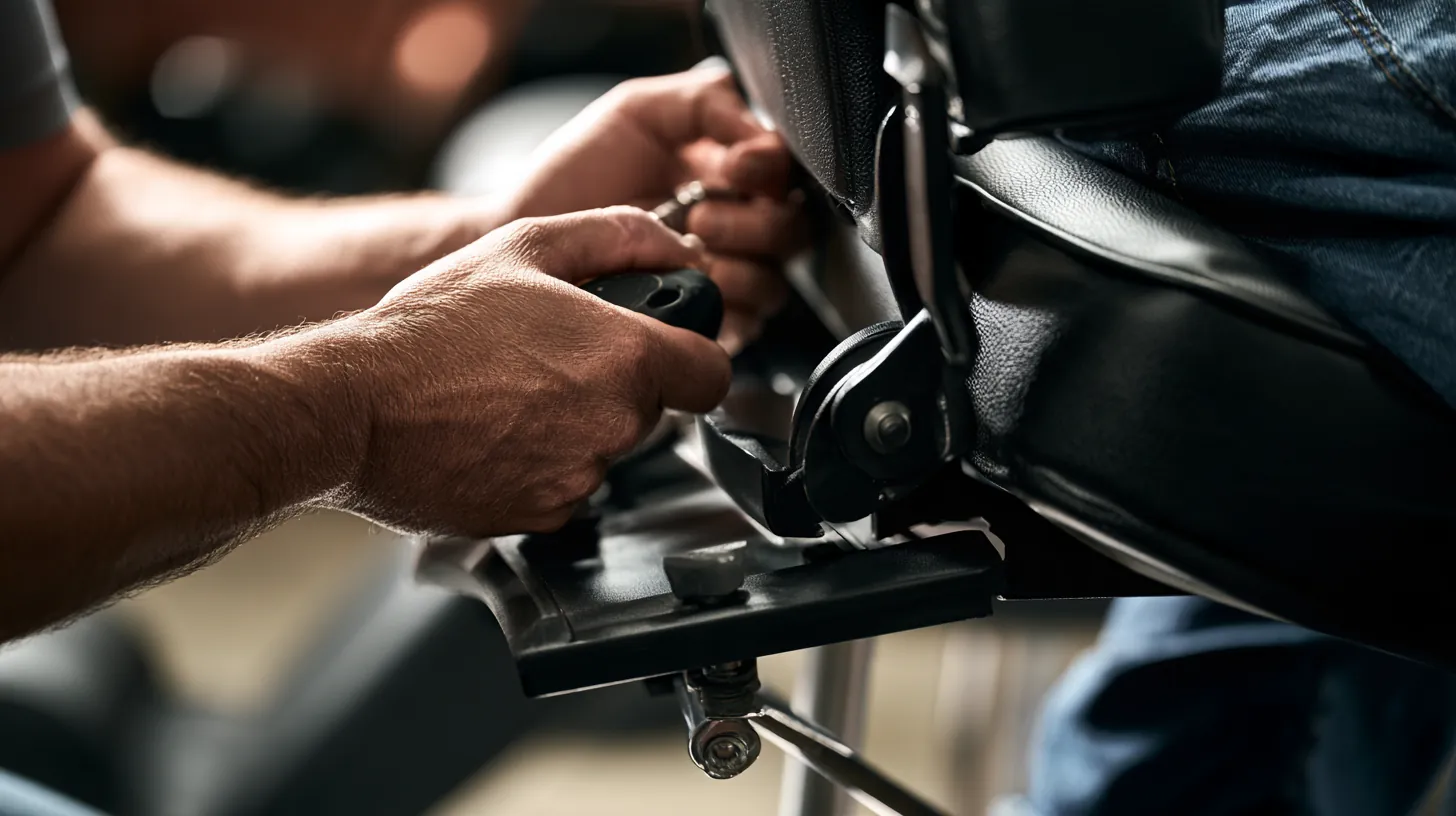
- Equipment that earns money from day one, such as a hydraulic barber chair, a commercial mixer or a pressure washer
- A repair that keeps the business open, like replacing a work van's alternator or a walk-in cooler compressor
- Inventory for a season you can forecast, such as holiday stock for an online shop
- Licensing, insurance deposits or certification fees that unlock new work
- A one-time marketing push with a defined budget, like a booth at a regional trade show
Expenses that fit poorly are open-ended or recurring: monthly rent, ongoing payroll, or covering losses in a business that is not yet profitable. Borrowing for those can turn one loan into a habit. If you find yourself planning a second personal loan to pay the first, step back and look at pricing or costs before taking on more debt.
A useful test: could you name the date the purchase will have paid for itself? If the barber expects the new chair to add four extra cuts a week at $30 each, a $2,500 chair pays for itself in about five months. That is a strong case, and it is the kind of math hidden meadow lending personal loans are best suited for.
Read the use-of-funds clause before you accept
Every personal loan agreement includes a permitted-use section, and some lenders exclude business purposes, so confirm business use is allowed in writing before you accept any offer.
Lenders restrict use for different reasons. Some fund only consumer purposes because their state license covers consumer lending. Others exclude business use because self-employment income is harder to verify. A few allow it but ask you to state the purpose on the application. None of these is a trap, but ignoring the clause is a breach of contract, and that gives the lender grounds to demand faster repayment.
When you compare offers, look for wording like "personal, family or household purposes only." That phrase usually means business use is excluded. Wording such as "any lawful purpose" usually allows it. If you are unsure, ask the lender directly and keep the answer. Readers who contact hidden meadow lending customer service with this question are usually told the same thing: the lender's written clause is what counts.
Shoppers who look at loans like hidden meadow lending matches often skip this step because the application asks only for a purpose from a drop-down list. Choose the option that matches reality, even if it says "business" and you worry it will lower your odds. An honest answer protects you if anything goes wrong later, and lenders that accept business use will price it into the offer you see.
How lenders look at self-employed income
Lenders verify self-employed income with tax returns, 1099 forms and bank statements, and most average the last one or two years rather than counting your best recent month.
A salaried borrower shows a pay stub and is done. A self-employed borrower shows a pattern. Expect a lender to ask for some combination of:
- The last one or two federal tax returns, including Schedule C
- 1099-NEC or 1099-K forms from platforms and clients
- Three to six months of business and personal bank statements
- A business license or DBA registration, depending on the lender
Lenders look at net income, not gross revenue. A detailer who bills $60,000 a year but deducts $38,000 in costs shows $22,000 of income on Schedule C, and that is the figure used to judge whether a payment is affordable. Owners who write off aggressively sometimes find their qualifying income lower than expected. If you came to this page through a hidden meadow lending search after a lender declined you, low reported net income is the most common reason.
Your personal credit score matters too, since the loan is in your name. Our personal loan eligibility guide lists the six things lenders in our network typically check, from age and residency to an active checking account. If your score is under 640, read the offers closely; bad credit loans for business use exist, but the rate will reflect the risk.
What common business purchases cost to finance
At an estimated 24.99% APR, a $1,000 purchase over 12 months costs about $95 a month, while a $2,500 purchase over 24 months costs about $133 a month and roughly $702 in total interest.
| Business purchase (example) | Amount | Term | Monthly payment (est.) | Total interest (est.) |
|---|---|---|---|---|
| Pressure washer and surface cleaner for a detailing van | $1,000 | 12 months | $95.04 | $140.47 |
| Point-of-sale tablet, card reader and receipt printer | $1,200 | 12 months | $114.05 | $168.57 |
| Commercial stand mixer for a home bakery | $1,500 | 12 months | $142.56 | $210.71 |
| Trade show booth, banner and samples | $2,000 | 12 months | $190.08 | $280.96 |
| Hydraulic barber chair, installed | $2,500 | 24 months | $133.42 | $701.99 |
| Walk-in cooler compressor replacement | $3,500 | 24 months at 21.99% | $181.56 | $857.35 |
All figures are estimates at 24.99% APR unless noted, with no origination fee included. Real offers range from about 5.99% to 35.99% APR depending on credit, income and state. Several hidden meadow lending readers also find it useful to compare the payment against one slow month of revenue. Plug your own quote into the personal loan calculator and compare the total cost to the extra revenue the purchase should bring in. For many people comparing offers found through a hidden meadow lending search, that single comparison settles the decision. Loans for bad credit may push the rate toward the top of the range, so run the numbers at 35.99% as a stress test too.
The risks of mixing personal credit and business costs
The main risk is that a personal loan makes you personally liable, so if the business slows, you still owe every payment and late payments land on your personal credit report.
A limited liability company can shield your personal assets from some business debts. A personal loan sidesteps that shield entirely, because you signed as an individual. That is not a reason to avoid the loan, and it is not a reason to skip a hidden meadow lending comparison, but it is a reason to size it to what your household budget could carry on its own for three or four months.
Three practical risks deserve a plan:
- Uneven income. Set the due date a few days after your most reliable client pays, and keep one payment in reserve if you can.
- Higher utilization elsewhere. If you also carry business costs on a personal card, your debt-to-income ratio rises, which can affect later borrowing.
- Blurred records. Deposit the loan into the business account and pay the installment from it, so your bookkeeper can trace every dollar.
People reading hidden meadow lending reviews sometimes say the hardest part was not the payment but the bookkeeping. Keep the loan agreement, the purchase receipt and each statement in one folder. It takes minutes and saves hours at tax time.
How interest and records work at tax time
Interest on a personal loan used for business purposes may be deductible as a business expense if you can trace the funds to the business use, so keep the paper trail from deposit to purchase.
Tax questions come up often among hidden meadow lending readers who run small shops. The IRS looks at how borrowed money is spent, not at what the lender calls the loan. If $2,500 goes straight from the loan deposit to the chair supplier, the interest on that $2,500 can be treated as a business cost. If the money sits in a personal account and gets mixed with groceries and rent, tracing becomes difficult and the deduction gets harder to defend.
A clean setup looks like this: the loan funds land in your business checking account, the purchase is paid from that account the same week, and each monthly payment comes out of the same account. Your year-end statement from the lender shows interest paid, which your tax preparer can match to the receipts.
We are not tax advisors, and rules differ for corporations, partnerships and sole proprietors. Ask a preparer before you count on any deduction, especially if part of the loan goes to personal use. A mixed-use loan can still work; you simply split the interest by the share used for each purpose. Owners who started with a hidden meadow lending search for a single purchase often find a mixed-use personal loan simpler than two separate loans.
Alternatives worth comparing first
Before taking a personal loan for business costs, compare a business credit card with a 0% intro period, a credit union loan, a nonprofit microloan, vendor financing and equipment leasing, since each can cost less in the right case.
- Business credit card with a 0% intro APR: cheapest if you can repay within the promo window, often 12 to 15 months. Expensive afterward.
- Credit union loan: rates are capped at 18% APR for most federal credit unions, though approval can take longer.
- Nonprofit and CDFI microloans: community lenders fund small businesses with coaching attached, but applications can take weeks.
- Vendor or manufacturer financing: equipment sellers sometimes offer 0% for 6 to 12 months on approved credit.
- Equipment leasing: lower upfront cost, but total cost is usually higher and you may not own the item at the end.
Among the options people weigh next to hidden meadow lending, the personal loan stands out when you need funds within days, want a fixed payoff date, and do not qualify for a long 0% promotion. Our small business loans page compares these routes for needs between $500 and $5,000 and explains how lenders in our network typically view requests from new owners.
Steps to request a personal loan for a business purchase
Get a written price for the purchase, gather two years of tax returns and recent bank statements, compare several offers on total cost and use of funds, then accept only the one that allows business use.
- Write down the exact purchase price, delivery date and the extra monthly revenue you expect.
- Pull your free credit reports and dispute any errors before you apply.
- Collect your tax returns, 1099s and three months of bank statements in one folder.
- Submit one request to see multiple offers; prequalification usually uses a soft credit check.
- Compare APR, fees, total repayment and the permitted-use clause side by side.
- Check typical ranges on our personal loan rates page so you can spot an outlier offer.
- Accept one offer, deposit the funds in your business account and make the purchase that week.
People who search hidden meadow lending often want to know whether one request commits them to anything, especially those comparing loans like hidden meadow lending matches with an offer from their own bank. It does not. You can review every offer, decline all of them, and owe nothing. That freedom is the point of comparing first: it lets you test what your business credit story looks like to lenders before you need the money urgently. If your file is thin or bruised, start the comparison early, because bad credit loans tend to take an extra day or two while lenders review bank statements, and an early start keeps that delay from landing on the week the purchase is due.
Questions borrowers ask
Will a personal loan used for my business show on my credit report?
Yes. A personal loan reports to your personal credit file regardless of how you spend the money. On-time payments can help your score over time, and late payments can lower it.
Can I use part of a personal loan for business and part for personal costs?
Many lenders allow mixed use if the agreement permits business purposes. Keep records showing how much went to each, because only the business share of the interest may be deductible.
Do I need an LLC to use a personal loan for business expenses?
No. Sole proprietors, freelancers and LLC owners can all use a personal loan where the lender allows business use. The loan is in your name either way, so an LLC does not limit your liability for it.
Related posts

Bank or Online Lender: Which Fits a Small Business Microloan?
Banks usually win on price, online lenders on speed. Here is how to choose for a $500–$5,000 working-capital need without overpaying.
Read the guide →
Personal Loan vs Credit Card for Car Repairs: Which Costs Less?
Card or loan for the mechanic's bill? A side-by-side look at APR, payoff time, credit impact and which repairs suit each option.
Read the guide →On our site
About the author
Marcus spent seven years as a credit union loan officer before writing about debt payoff, consolidation and repair budgeting for everyday borrowers.
Ready to see your personal loan options?
Takes about five minutes, costs nothing to use and you are never obligated to accept an offer.